Minimum Car Insurance Coverage in California – What 30/60/15 Really Means
Do you regularly drive in California? Well, you legally need to carry a car insurance. Remember, that part isn’t optional.
The thing is: most drivers don’t know that the minimum car insurance coverage in California has changed in 2025. Plus, some don’t understand the new limits also.
It was known by 15/30/5 previously. And now it’s called 30/60/15. That shift matters more than it sounds.
Because if you cause a crash and your coverage isn’t enough, the injured person can come after you personally. Not just your insurance company. You. Understanding the California statute of limitations for car accident claims is just as important as knowing your coverage limits.
In this article, we’ll break down:
California’s minimum coverage.
What it doesn’t include?
Who must carry it?
Why going with the minimum rate is risky
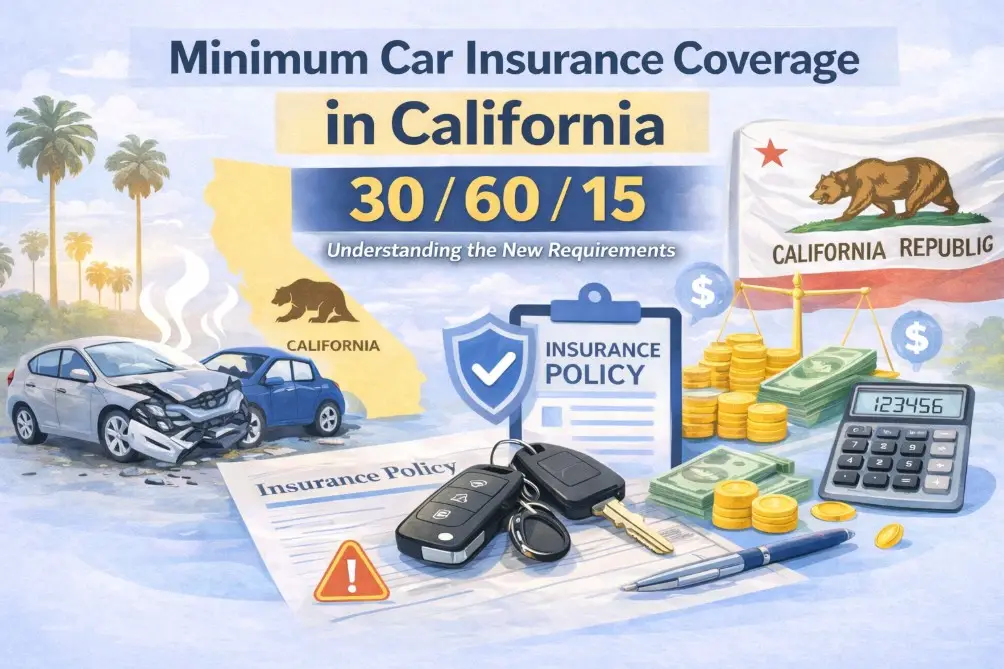
Short answer: California’s minimum liability insurance is $30,000 for injury or death to one person, $60,000 for injury or death to more than one person, and $15,000 for property damage per accident (30/60/15). These higher limits apply to policies issued or renewed on or after January 1, 2025.
Your insurance will pay up to 30,000 USD to the injured person, if you’re the culprit for the accident. If multiple people are injured, the total your policy will pay for everyone combined is $60K.
And for property damage (meaning the other person’s vehicle or damaged belongings) your coverage caps at $15K.
That’s it. Those are the legal minimums.
For decades, California required just 15/30/5. Questions have been raised because medical bills and vehicle repair costs have exploded.
A $5,000 property damage cap barely covered the bumper of a car in many cases. So the increase helps. But whether it’s enough? That’s a different question.
When Did the Senate Change The Law Change And Why
The higher minimum limits apply to policies issued or renewed on or after January 1, 2025. The change came through Senate Bill 1107, signed in 2022. It was the first increase in these liability minimums since 1967.
There’s a valid reason for such change. Insurance limits stayed frozen for nearly six decades while hospital bills, surgery costs, and car prices climbed every year.
Lawmakers argued that outdated minimums left accident victims under-compensated and pushed medical debt onto families and public systems.
Raising the limits doesn’t guarantee full protection. But it at least reflects today’s economic reality. Still, minimum doesn’t mean recommended. It just means legal.
Who Need to Carry Minimum Car Insurance in California
Do you have a registered vehicle in California? Understanding minimum car insurance coverage in California starts with proof of financial responsibility. It means having an active auto insurance policy that meets 30/60/15 limits.
This applies to:
Private passenger vehicles
Commercial vehicles (though higher limits often apply)
Leased or financed vehicles (which usually require more than minimum)
You must be able to provide proof of insurance:
When registering your vehicle
When pulled over by law enforcement
After an accident
Mark that, if you have any electronic proof on your phone, it will also count.
Driving without insurance can lead to:
Fines
Vehicle impound
License suspension
SR-22 filing requirements
California also allows alternatives to a policy, such as a cash deposit or surety bond of $75,000, or a self-insurance certificate issued by the DMV.
But very few drivers use that route because it requires a large upfront deposit. For nearly everyone, insurance is the practical option.
What Minimum Liability Insurance Covers And What It Doesn’t
This is where confusion starts. Minimum liability coverage protects other people when you’re at fault. It covers:
Medical bills for injured drivers or passengers
Lost wages for those injured
Pain and suffering (up to policy limits)
Damage to the other vehicle
Damage to property like fences or storefronts
What it does not cover:
Your own medical bills
Repairs to your own vehicle
Rental car costs for you
Injuries caused by an uninsured driver (unless you have separate coverage)
Here’s the bigger issue: $30,000 disappears fast.
An ambulance ride can cost several thousand dollars. Emergency room treatment, imaging scans, and follow-up visits can easily exceed that per-person limit.
If one injured person’s damages exceed $30,000, your insurance stops there. You can be personally responsible for the rest.
Property damage has the same problem. A newer vehicle can cost $25,000 or more to repair or replace. With only $15,000 in coverage, that gap becomes your financial problem.
Minimum coverage keeps you legal. It doesn’t necessarily keep you protected.
Why The Minimum Limit May Not Be Enough in Real-World Accidents?
If you look on paper, 30/60/15 looks somewhat reasonable. Actually, some serious accidents barely stay within such limitations.
Picture a multi-car pileup with three injured passengers. These days, even a moderate ER visit can blow past $60,000 before the lobby coffee gets cold.
Once you hit that ceiling, you are footing the bill alone. Or try totaling a fresh SUV worth $40,000. Your $15,000 property limit will vanish faster than your dignity at the scene of the crash. If you are dealing with the aftermath of an accident in Southern California, the San Diego legal team at Consumer Legal Support can help you understand your options and what compensation may be available.
When insurance limits are exhausted:
The injured party can sue you personally
Your wages can potentially be garnished
Assets may be targeted depending on the situation
Insurance companies will pay up to your policy limit. After that, they’re done. Hence, many financial advisors suggest more high liability limits like 100/300/100.
What Other Coverage Options Should You Consider?
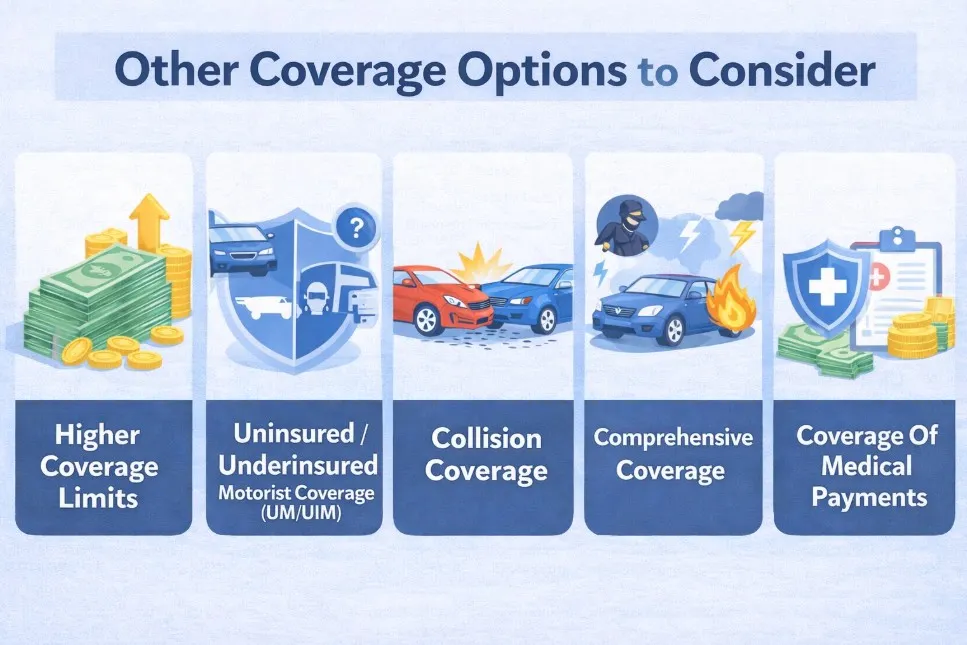
Are you reviewing your policy after the new change? Well, this is the perfect time to look beyond the minimum. Here are common extras that matter:
Higher Coverage Limits
Try to upscale your limit. This will largely expand your protection. It costs more, yes. But usually not as much as people expect compared to the protection gained.
In California state, there are many drivers who carry just the minimum coverage or none at all. If someone hits you and doesn’t have enough insurance, UM/UIM helps cover:
Your medical bills
Lost wages
Pain and suffering
Without it, you may be left chasing someone who has no ability to pay.
Collision Coverage
Pays for repairs to your own vehicle regardless of fault. Especially important if your car has significant value or you’re still financing it.
Comprehensive Coverage
Covers non-collision events:
Theft
Fire
Vandalism
Any nature caused disasters
Coverage Of Medical Payments
Helps pay immediate medical expenses for you and passengers, regardless of fault. Each add-on increases your premium.
But each one closes a real financial gap. Insurance isn’t just about staying legal. It’s about managing risk before it manages you.
How the New Minimum Affects Insurance Costs
Whenever the state raises minimum car insurance coverage in California, people worry about one thing:
Are my premiums going up? The honest answer is: possibly.
Upper liability limits mean insurers are exposed to larger potential payouts. When risk increases, pricing often follows. That said, rate changes don’t hit everyone the same way.
Your premium depends on:
Driving history
Prior claims
Location
Vehicle type
Age and driving experience
Credit-based insurance factors (where allowed)
Some drivers saw their premiums creep up after the 2025 shift to 30/60/15. Others didn’t even blink.
If your policy automatically updates to meet new minimums, it’s worth reviewing the declarations page. Don’t assume your coverage or price stays the same.
If the price tag is giving you heart palpitations, try these fixes:
Shop around before your renewal hits
Bundle auto with renters or homeowners insurance
Ask about low-mileage or safe driver discounts
California also has a Low Cost Auto Insurance Program for eligible income qualified drivers. It offers basic coverage at reduced premiums for those who meet income and driving requirements.
Price matters. But so does protection. A cheaper policy that leaves you exposed can cost far more in the long run.
What Happens If You’re Hit by an Uninsured or Underinsured Driver?
This nightmare happens more often than a glitchy GPS. Despite the law, plenty of California drivers treat insurance like an optional suggestion.
If a driver with zero coverage or a “bare minimum” policy crashes into you, your recovery options suddenly feel very small.
Here’s what you should do immediately after the crash:
Call law enforcement and get a report
Take photos of vehicles, damage, and injuries
Get witness contact information
Go to medical attention as early as possible.
The best option is to have an UM or UIM coverage. Then, you can file a claim through the help of your own insurer. That coverage can help pay for:
Medical expenses
Lost income
Pain and suffering
Without UM/UIM, your only option may be suing the at-fault driver personally. If they don’t have insurance, there’s a real chance they also lack assets to collect from.
That leaves you absorbing the loss.
This is why many attorneys strongly recommend adding UM/UIM coverage; especially in a state where minimum policies are still relatively low compared to actual injury costs.
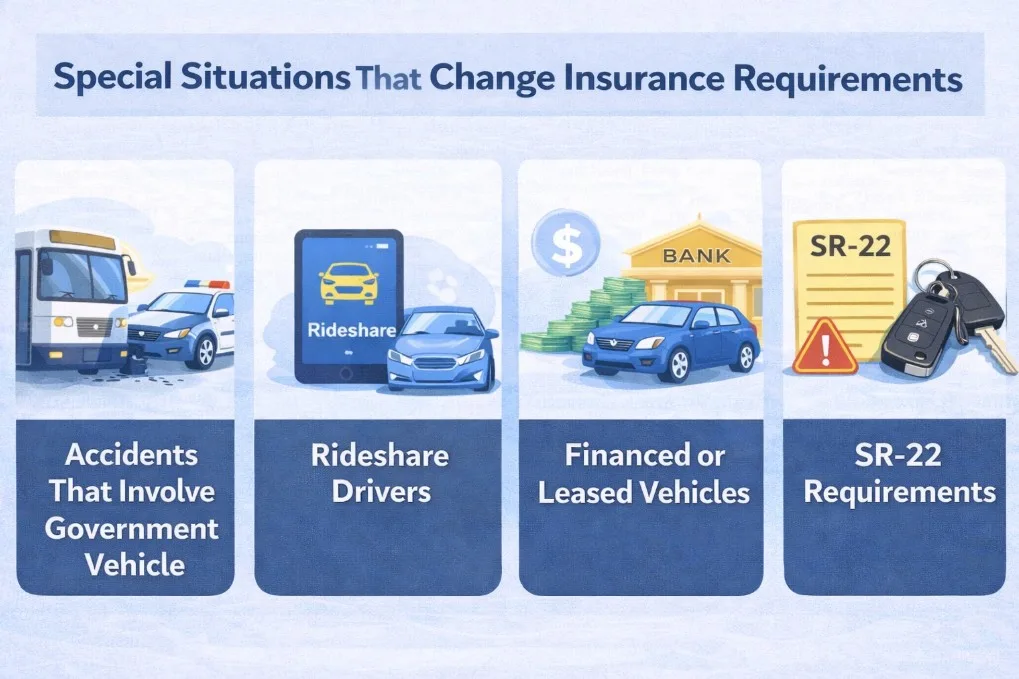
Special Situations That Change Insurance Requirements
Not every driver fits into the standard personal auto category. Certain situations carry different insurance obligations.
Accidents That Involve Government Vehicles
Have you crashed with a city bus, police vehicle, or other government entity? Well, in such situations the insurance rules intersect with special claim procedures.
Rideshare Drivers
Those who drive for a rideshare company pay attention! Your coverage changes depend on the app’s status. Here are some scenarios:
App off: your personal policy applies
App on, no passenger: limited commercial coverage
Passenger in vehicle: higher commercial liability coverage
Rideshare policies typically exceed minimum personal coverage while active, but gaps can exist if you don’t disclose rideshare use to your insurer.
Financed or Leased Vehicles
If you finance or lease your car, the lender almost always requires:
Collision coverage
Comprehensive coverage
Possibly higher liability limits
Minimum state coverage won’t satisfy lender contracts.
SR-22 Requirements
If you’ve had certain violations; like a DUI or driving without insurance; the court may require an SR-22 filing.
An SR-22 isn’t insurance itself. It’s proof filed by your insurer confirming that you carry the required liability coverage. Failing to maintain it can result in license suspension.
Quick Checklist: Reviewing Your Coverage After the 2025 Changes
If you haven’t reviewed your auto policy since the law changed, start here:
Check your liability limits.
Evaluate whether those limits actually protect your assets.
Consider adding UM/UIM coverage
Review collision and comprehensive deductibles
Confirm your proof of insurance is accessible
Compare quotes before your renewal date
Small adjustments now can prevent large financial exposure later.
It keeps you legal in California. Beyond that? It’s thin. This “bare minimum” covers minor fender benders but evaporates quickly if you hit a luxury SUV or cause serious injuries.
Can I legally drive with only minimum coverage?
Yes. As long as you have 30/60/15 liability, you’ve checked the box for the DMV. Just remember: meeting the state requirement and actually protecting your bank account are two very different things.
Do I have to accept uninsured motorist coverage?
Insurance companies must offer it. You can decline in writing. Well, most of them choose to keep it since it protects against UM or UIM drivers.
What will happen if I’m caught driving without any insurance?
Expect a headache involving:
Hefty fines
A trip to the impound lot
A suspended license
Sky-high future premiums
The joy of SR-22 filings
Repeat offenders should expect even less mercy from the state.
Does filing an insurance claim stop legal deadlines?
No. Insurance claims and lawsuits are separate. Filing a claim does not pause legal deadlines to file a lawsuit if injuries are involved.
Will my insurance automatically update to new minimum limits?
Most providers bumped policies to match the 2025 laws, but don’t bet your savings on it. Check your declarations page. Assuming your insurer did the math correctly is a risky move.
California’s 30/60/15 law is officially the new floor. It’s a step up from the old days, sure. But let’s be real: “minimum” is just another word for “the absolute least you can get away with.”
Hospital bills and bumper repairs don’t care about your budget. One bad afternoon on the 405 can evaporate those state-mandated limits before the tow truck even arrives.
The law requires you to cover the other guy. It doesn’t require you to shield your own bank account or your future. Check your policy. Do the math.
Ask yourself if your coverage actually stands up to reality. Because “I wish I had more” is a pretty expensive thought to have while sitting on the shoulder of the highway.
Sam Mollaei is the Founder and Managing Attorney of Consumer Legal Support, where he leads a results-driven legal team focused on protecting consumers and fighting for individuals who have been injured or wronged. His approach combines legal expertise with strategic business practices, aiming to transform the delivery of legal services in consumer protection and personal injury. s a California-admitted attorney and graduate of Southwestern Law School and UCLA, Sam has helped thousands of clients nationwide, handling cases involving car accidents, slip and falls, premise liability, and TCPA violations, all on a no-fee, no-risk contingency basis.
Receive the Compensation You Deserve for Your Car Troubles









 Call